
Lightweight flexible battery solution based on InGaP / GaAs / Ge triple junction gallium arsenide technology system.
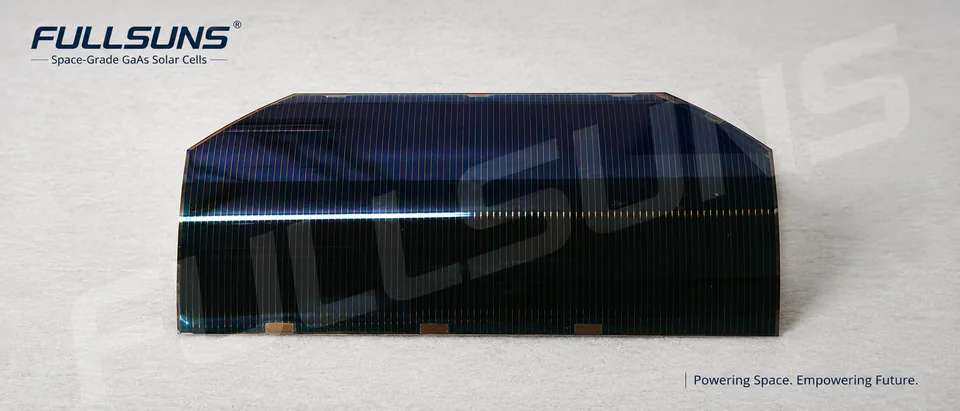
Using the mature InGaP/GaAs/Ge triple-junction gallium arsenide technology system, while retaining the high reliability and high efficiency advantages of the traditional space-level triple-junction structure, it significantly reduces weight and improves flexibility through Ge (germanium) substrate thinning technology, achieving a balance between lightweight, high specific power and bendable characteristics.
Compared with traditional rigid space solar cells, thinning Ge substrates can reduce device quality and enhance flexibility, adapting to the application requirements of lightweight, high integration and special structures.
For solar-powered UAV integration. Standard supply is an individual, unencapsulated cell; interconnection, lamination and wing integration are separate work packages.
For space applications. Request the model-specific datasheet, delivery configuration and applicable test evidence for your mission.
Planning a complete spacecraft power configuration? Explore Space Power Solutions.
These standard sizes belong to Flexible GaAs Solar Cells only, not to the Thinned Upright Ge-Substrate product line. Do not transfer electrical, mechanical or environmental specifications between products.
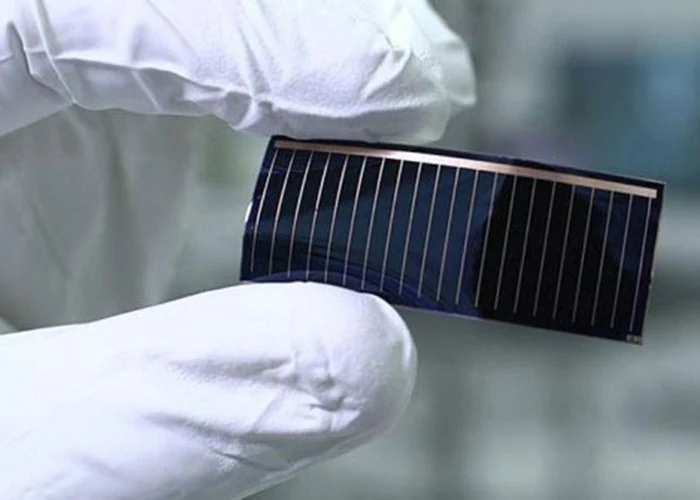
For 2040, customers or their integration partners carry out interconnection, bonding, lamination and encapsulation. Custom packaging is subject to quantity and engineering review; a bare cell is not a ready-to-install solar wing or complete aircraft power system.
Specify the requested model, solar spectrum, irradiance, cell operating temperature and measurement area. Request model-specific I–V curves and temperature coefficients; AM0 and AM1.5G data are not interchangeable.
Provide the required output and power-management input limits. Ask for contact layout, polarity, metallization and available interconnection guidance. Final electrical configuration requires model-specific data and system review.
Describe the mounting surface, curvature, bending direction and whether bending is static or repeated. Single-cell flexibility does not establish the cyclic bending capability of an interconnected or encapsulated assembly.
Identify the substrate, insulation, adhesive, cover film and proposed assembly process. State cell temperature limits, pressure, UV exposure, vibration and service life. Material compatibility and validation scope are project-specific.
Ask about the current datasheet, contact drawings, available I–V data, handling guidance and applicable test records. Availability, disclosure conditions and any additional testing are confirmed during review. Existing reference PDFs are not a substitute for an agreed delivery specification.
Two FULLSUNS concept illustrations show flexible GaAs solar integration for a high-altitude fixed-wing platform and an aerostat. They support requirements discussions and engineering evaluation. FPC-W-2 is an example requirements identifier, not a new standard cell model.
Concept illustrations, not delivered hardware or test results. Approximately 20 km is a target altitude; approximately 1 kW is an initial sample requirement. These labels do not establish a confirmed order, guaranteed output or validated flight altitude.
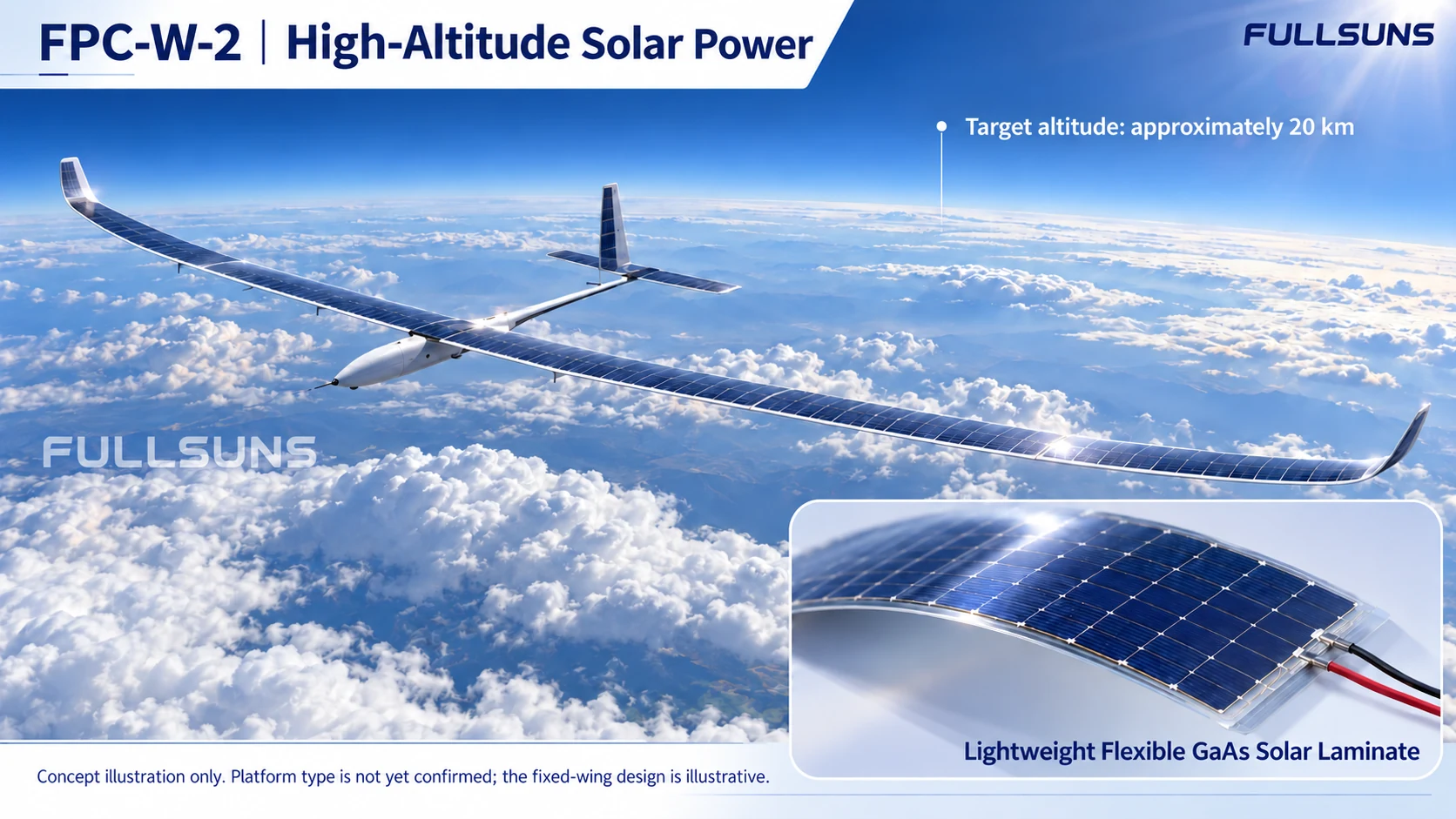
The aircraft type is unconfirmed. Its shape and wing-mounted flexible laminate illustrate an integration direction only.
View High-Resolution Concept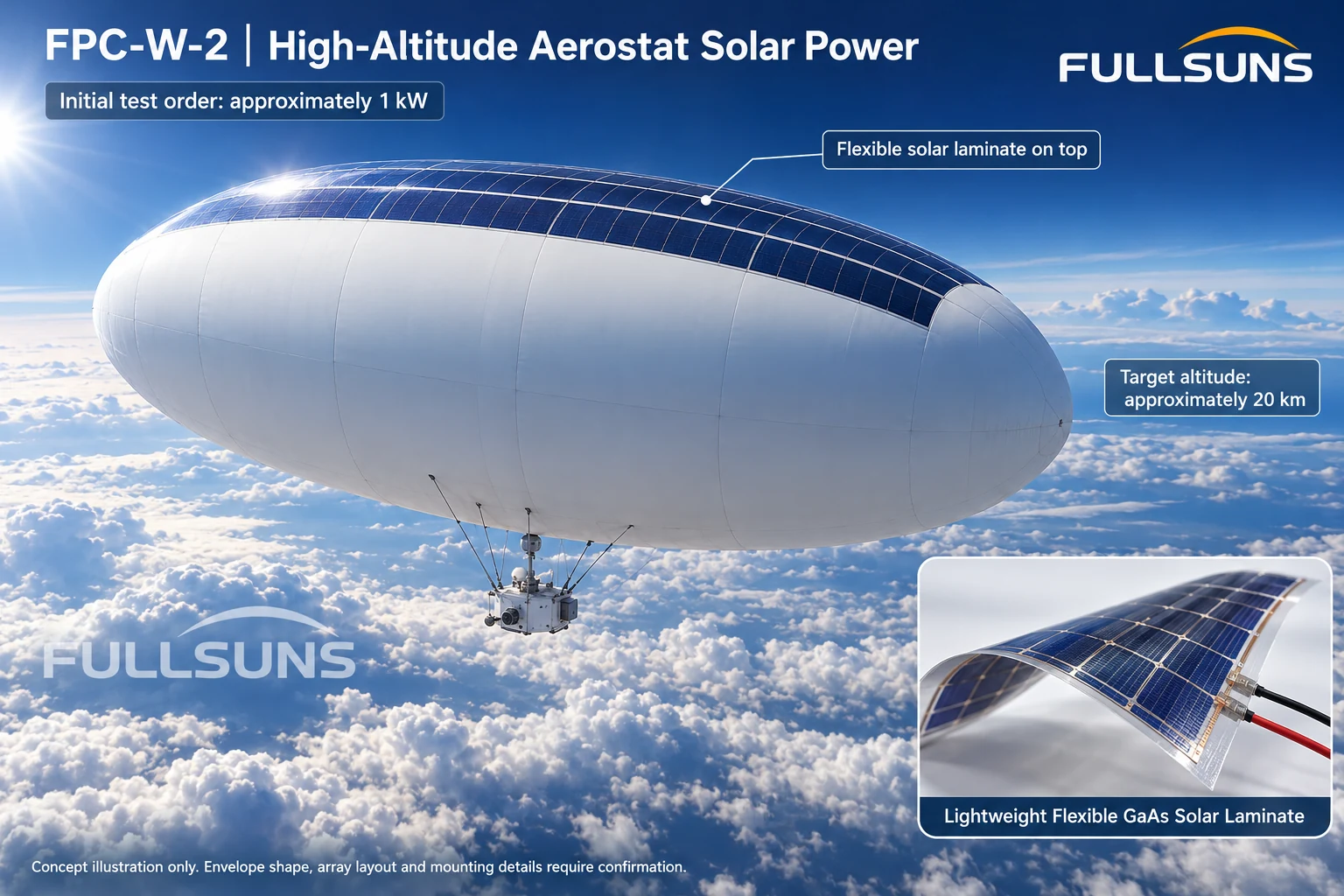
Envelope shape, top-mounted array layout and mounting details require project confirmation. The laminate is a configuration reference only.
View High-Resolution ConceptStandard 2040 supply remains an individual, unencapsulated cell. Interconnection, lamination, mounting and system validation are separate work packages. Confirm delivery scope and test requirements separately. These concepts do not specify the thinned upright Ge-substrate product line.
Discuss Flexible Integration RequirementsThe standard 2040 offering is an unencapsulated cell. Confirm interconnection, packaging and mounting responsibilities before ordering.
No. The two products require separate electrical data and environmental evidence. AM0 test conditions alone do not demonstrate mission qualification.
No. Request evidence for the relevant cell or assembly, including bend direction, radius, temperature, cycle count and failure criteria.
Include the model, sample quantity, mounting geometry, electrical interface, environmental conditions and target schedule. Unknown items can be left open for discussion. Send drawings to marketing@fullsuns.com.
Start an FPV enquiryAvailability of certain products, configurations or technical data may be subject to applicable export-control, end-use and destination review.
For product selection and a quotation, email marketing@fullsuns.com
Ask about the current datasheet, contact drawings, available I–V data, handling guidance and applicable test records. Availability, disclosure conditions and any additional testing are confirmed during review. Existing reference PDFs are not a substitute for an agreed delivery specification.